
Fresh, unwashed blueberries can last in the fridge for 7 to 14 days if stored properly in a breathable container. However, if they are washed before storage or exposed to excess humidity, surface moisture will accelerate spoiling, causing mold to grow within 3 to 5 days.
We’ve all been there. You’re at the grocery store or a local farmer’s market, and you see those beautiful, plump, deep-blue baskets of fresh berries. You buy a couple of pints, thinking of morning smoothies, fresh pancakes, or just healthy snacking.
But then life gets busy. A week later, you reach into the back of your refrigerator, and instead of a sweet snack, you’re greeted by a fuzzy, gray, mushy mess.
It feels like a total waste of money. If you are wondering how long blueberries last in the refrigerator or how to stop this waste, you are in the right place. Because berries have exceptionally thin skins and a high water content, they are among the most perishable fruits in your kitchen.
Let’s skip the generic textbook advice. As someone who focuses on reducing kitchen food waste, I’ve tested almost every single blueberry storage method under the sun. Today, I’ll give you the real-world facts, the hidden science behind berry rot, and a step-by-step routine that represents the best way to store blueberries to legitimately double their lifespan.
Direct Answer: Blueberry Shelf Life
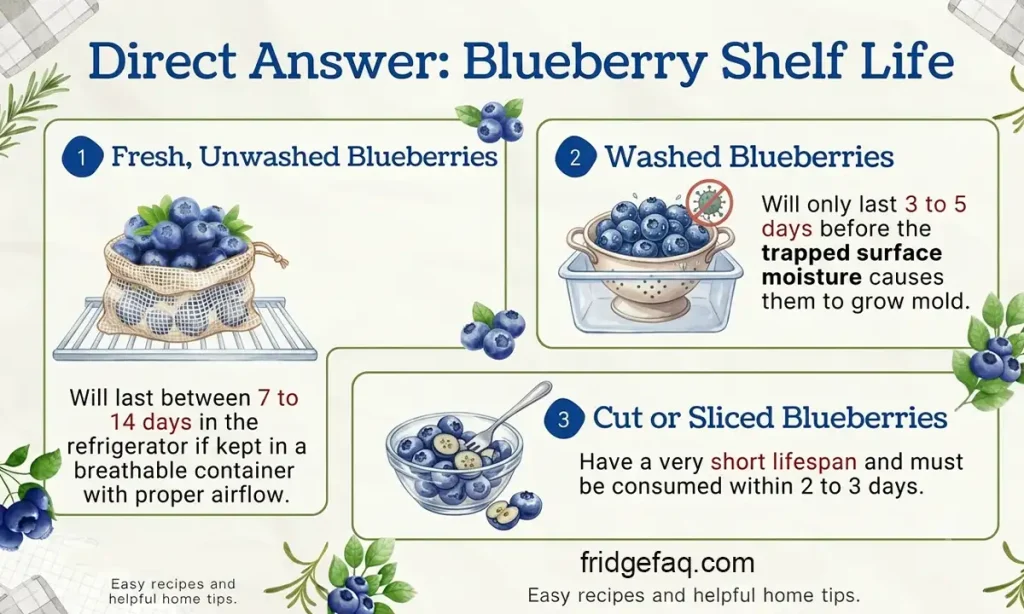
- Fresh, unwashed blueberries: Will last between 7 to 14 days in the refrigerator if kept in a breathable container with proper airflow.
- Washed blueberries: Will only last 3 to 5 days before the trapped surface moisture causes them to grow mold.
- Cut or sliced blueberries: Have a very short lifespan and must be consumed within 2 to 3 days.
Room Temp vs. Fridge vs. Freezer
How long your berries stay crisp depends entirely on how you handle them from the moment you walk through your kitchen door. Here is a realistic timeline of what to expect:
| Storage Type & Condition | Realistic Lifespan | What Happens to the Berries? |
| Kitchen Counter (Room Temp) | 1 to 2 Days | They lose their snap, shrivel up, and start fermenting. |
| Fridge (Unwashed & Breathable) | 7 to 14 Days | The Sweet Spot. They stay firm, sweet, and plump. |
| Fridge (Washed Ahead of Time) | 3 to 5 Days | Surface moisture triggers fuzzy mold growth almost overnight. |
| Fridge (Cut or Sliced) | 2 to 3 Days | Exposure to oxygen darkens the flesh and breaks down texture. |
| Deep Freezer (Properly Frozen) | 10 to 12 Months | Excellent for baking and smoothies; texture softens upon thawing. |
Why Are Blueberries So Sensitive?
To beat the system and make your produce last longer, you have to understand why it goes bad in the first place. Blueberries face three major enemies in your refrigerator: Moisture, Ethylene Gas, and the Loss of their Natural “Bloom.”
1. The Mystery of the Silver-White Powder (The “Bloom”)
Have you ever noticed that fresh, high-quality blueberries look like they have a dull, powdery, silver-white coating on them? A lot of people think this is dust or pesticide residue and scrub it off immediately.
Don’t do that. That powder is a completely natural, organic wax called the “bloom.” The blueberry plant creates it to act as a waterproof shield. It keeps moisture inside the berry so it doesn’t dry out, and it prevents outside bacteria and fungal spores from penetrating the skin. Once the bloom is washed away, the berry’s countdown timer accelerates rapidly.
2. The Trap of Surface Moisture
Mold spores are everywhere, but they need water to wake up and start eating your fruit. When you wash your berries before putting them in the fridge, you leave tiny droplets of water around the stem area. In the cold, dark, enclosed space of a refrigerator, that trapped moisture triggers a fungal disease called Botrytis cinerea (gray mold). Within 24 hours, one infected berry will ruin the entire container.
3. The Ethylene Gas Effect
Blueberries are sensitive to ethylene, a natural ripening gas given off by fruits like apples, bananas, and avocados. If you store your blueberries right next to a bag of apples in the fridge, the ethylene gas will force the blueberries to overripen, turn mushy, and spoil within days.
Store-Bought vs. Wild Hand-Picked Blueberries
Here is an insider secret most blogs won’t tell you: Where you get your blueberries changes their expiration date.
- Grocery Store Blueberries: These have already traveled in refrigerated trucks for days before hitting the shelves. When you buy them, they might already be 4 to 6 days old. Expect them to last around 7 to 10 days in your home fridge.
- Hand-Picked or Farmer’s Market Blueberries: These were likely on the bush yesterday. Because they haven’t suffered from rough shipping or temperature shock, they still have a thick, intact bloom. With proper care, these fresh berries can easily coast past the 14-day mark.
My 4-Step Routine to Double Your Blueberry Shelf Life
Forget expensive, high-tech vacuum containers. You can easily keep fresh blueberries delicious for up to two weeks using nothing but the original packaging and a basic household item.
Step 1: The “Bad Apple” Inspection
Never put a new container of berries straight into the fridge. Pour them out gently onto a clean baking sheet or large plate. Inspect them carefully—knowing how to spot bad blueberries at this stage is crucial. Pull out any berries that are already squishy, leaking juice, or showing a hint of white fuzz.
Step 2: Keep the Clamshell
A lot of people think transferring berries to an airtight plastic container keeps them fresh. It actually does the opposite by trapping gases and creating condensation. Keep them in the original plastic clamshell container. Those slots and slits at the top and bottom are engineered specifically to allow proper ventilation and air circulation.
Step 3: The Paper Towel Moisture-Magnet
Take a standard piece of kitchen paper towel and fold it down so it fits perfectly at the bottom of your plastic clamshell container. Pour your sorted, completely dry, unwashed blueberries back into the box on top of the paper towel. Any humidity or minor condensation will be pulled into the paper towel instead of sitting on the berry skins.
Step 4: Smart Fridge Placement
Do not place your blueberries in the refrigerator door shelves. Every time you open the door, warm air from your kitchen hits the container, causing condensation. Instead, tuck them onto the middle shelf or inside the crisper drawer (set the slider to low humidity). Keep them far away from ethylene-producing fruits like apples or pears.
💡 Pro-Tip (The Vinegar Bath Exception): If your berries are already looking a bit tired and you must wash them, submerge them in a mixture of 3 cups water and 1 cup white vinegar. The vinegar kills mold spores. However, you must spin them completely dry in a salad spinner lined with paper towels before refrigerating them.
How to Tell If Blueberries Have Spoiled
Before you throw a handful of blueberries into your blender, do this quick 5-second quality check:
- The Wrinkle Test: If the skin looks heavily wrinkled and shriveled, the berry has lost its internal moisture. If it’s not moldy, it’s still safe to use in a baked pie or a smoothie, but it will lose its crisp texture for raw snacking.
- The Slime Factor: If the berries feel sticky, slimy, or leave a wet, stained residue on the bottom of the container, the cell walls have collapsed. They are spoiled.
- The Fuzzy Network: Look closely between the gaps of the berries. If you see fine, spiderweb-like white or gray threads, that is mold. Discard the affected area immediately.
- The Fermentation Aroma: Open the box and take a sniff. If you smell something sharp, sour, or reminiscent of vinegar or acetone, the natural sugars have started to ferment.
What About Cut Blueberries?
The moment you cut a blueberry, its shelf life plummets down to just 2 to 3 days. Once the skin is open, the internal flesh reacts with the oxygen (oxidation), and the juices leak out rapidly. To store cut blueberries:
- Place a dry paper towel inside a shallow container.
- Lay the cut pieces in a single layer on top.
- Seal it with a lid and place it in the absolute coldest part of your fridge (usually the back of the top shelf).
The Right Way to Freeze Blueberries
If you hit a massive summer sale, freezing is the ultimate way to preserve blueberries without losing their antioxidants and vitamins. They will stay perfect in the freezer for up to 12 months.
Unlike storing them in the fridge, you must wash blueberries before freezing them. Here is how to do it right:
- Wash and Completely Dry: Rinse your berries under cold water. Spread them out onto a clean microfiber cloth or paper towels. Let them sit for an hour until they are 100% dry.
- The Flash Freeze: Line a large baking sheet with parchment paper. Spread the dry blueberries out in a single layer, making sure they aren’t touching each other. Freeze for 2 to 3 hours until rock hard.
- Bag and Seal: Pour the frozen berries into a heavy-duty freezer Ziploc bag. Press as much air out of the bag as possible before zipping it closed.
FAQs
Can you eat blueberries with a little bit of mold if you wash them?
No. Blueberries are small and porous. By the time you see fuzzy mold on the outside, the microscopic roots have likely penetrated deep into the flesh. Eating moldy berries can cause digestive discomfort or allergic reactions.
Why do my blueberries taste like refrigerator air?
Blueberries have very thin skins and can easily absorb strong odors from surrounding foods (like onions or garlic). Always store them in their original ventilated clamshell rather than an open bowl.
Is the white stuff on blueberries pesticide?
In most cases, no. That silver-white, waxy coating is called the “bloom.” It is a natural layer produced by the plant itself to protect the fruit from moisture loss and insects. It is completely safe to consume.
The Verdict
At the end of the day, maximizing your fruit’s shelf life isn’t about buying expensive gadgets; it’s about managing airflow and moisture. Keep them unwashed, protect their natural silver bloom, filter out the squishy ones early, and give them a paper towel to rest on.
Now, I want to hear from you! Have you been making the mistake of washing your berries too early? Let me know your experiences or any questions you have in the comment section below!

Hey, I’m MD BELAL! I’m the founder and appliance lover behind FridgeFAQ.com. Over the last 5 years, I’ve spent countless hours fixing cooling issues, optimizing temperatures, and turning ordinary mini fridges into fun DIY projects. I started this site to break down complicated fridge problems into simple, friendly advice so you can save money and fix your own appliances with confidence!