
If you are looking for a quick and definitive answer: According to the USDA, cooked chicken can safely stay in the fridge for 3 to 4 days.
To guarantee this shelf life, your refrigerator must be consistently maintained at 40°F (4°C) or below, and the leftovers must be stored in an airtight container. If you cannot consume the chicken within this 4-day window, it is highly recommended to transfer it to the freezer immediately.
However, food safety isn’t always one-size-fits-all. Factors like cooking methods, ingredients (such as acidic sauces), and even the specific shelf where you store your food inside the refrigerator play a massive role in preventing foodborne illnesses.

How Long Can Cooked Chicken Stay in the Fridge?
Different types of chicken dishes age differently. Here is the quick cheat sheet I use in my own kitchen to track chicken shelf life:
Different types of chicken dishes spoil at varying rates. Here is a comprehensive storage guide for different preparation methods:
| Type of Chicken Dish | Fridge Storage (33°F – 40°F) | Freezer Storage (0°F or Lower) |
| Plain Roasted / Grilled Chicken | 3 to 4 Days | 3 to 4 Months |
| Chicken in Acidic Sauce (Tomato/Lemon) | 4 to 5 Days | 2 to 3 Months |
| Store-Bought Rotisserie Chicken | 3 to 4 Days | 4 Months (Shred before freezing) |
| Ground Chicken or Sausages | 3 to 4 Days | 2 to 3 Months |
| Chicken Soup, Stew, or Curry | 3 to 4 Days | 4 to 6 Months |
2 Crucial Leftover Storage Rules You Might Be Missing
Foodborne bacteria like Salmonella and Campylobacter do not just depend on a calendar; they thrive based on environmental conditions. Understanding these two factors can significantly impact your food safety:
1. The “Sauce” and Acidity Factor
Did you prepare your chicken in a heavy tomato sauce, a lemon-infused glaze, or a vinegar-backed BBQ sauce? High acidity lowers the pH level of the food, creating a hostile environment for bacterial replication. While dry grilled chicken strictly follows the 4-day rule, highly acidic chicken dishes can securely stretch into Day 5.
2. Never Store Leftover Chicken in the Fridge Door
The temperature inside refrigerator door bins fluctuates constantly every time the door opens. This exposure to warm ambient air causes condensation inside your storage containers, accelerating mold and bacterial growth.
- Pro Tip: Always store your leftover chicken on the bottom shelf towards the back. This is the coldest and most temperature-stable zone in any refrigerator.
How to Tell if Cooked Chicken Has Gone Bad
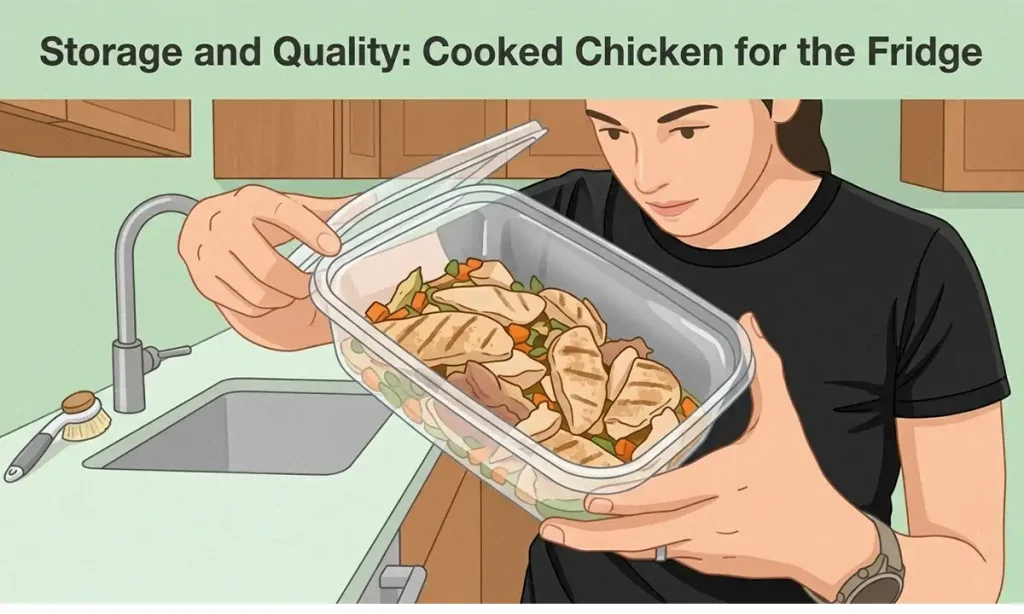
Please don’t just open the lid, take a quick sniff, and assume it’s safe. The really bad bacteria (the ones that cause severe food poisoning) don’t have any smell at all. But regular spoilage bacteria will give you some pretty obvious hints. Look for these three things:
- The Color: Fresh cooked chicken is white, tan, or brown. If it’s starting to look a little gray or has a dull, greenish tint, just throw it out.
- The Smell: If you open the container and it smells sour, like ammonia, or just “off,” don’t even think about tasting it.
- The Slime: This is the ultimate dealbreaker. Pick up a piece of the chicken. If it feels slippery or slimy, bacteria have already started building a biofilm on it. And no, washing it off under the sink won’t save it.
3 Common Leftover Mistakes That Compromise Food Safety
To preserve both the flavor and safety of your chicken leftovers on Day 3 and beyond, avoid these critical handling mistakes:
- Leaving Chicken to Cool on the Counter: Leaving food out to reach room temperature before refrigerating is a dangerous practice. Bacteria multiply rapidly in the “Danger Zone” (between 40°F and 140°F). Refrigerate cooked chicken within 2 hours of cooking (or 1 hour if the ambient temperature exceeds 90°F).
- Utilizing Deep Storage Containers: Storing a large volume of hot chicken in a single deep bowl traps heat in the center for hours. Divide massive portions into multiple shallow containers to ensure rapid, even cooling.
- Relying on Cheap Plastic Wrap: Oxygen exposure causes freezer burn and off-flavors. Transition to high-quality glass containers with airtight locking lids or use heavy-duty vacuum-sealed storage bags.
My Favorite Trick for Reheating Chicken
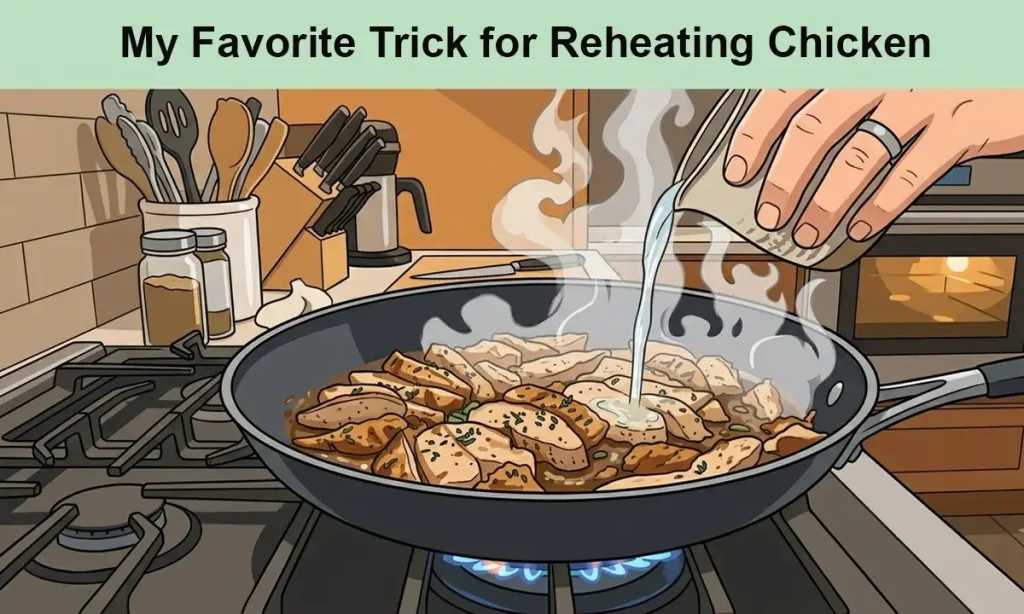
We all know the struggle of microwaving leftover chicken only to have it taste like a rubber tire. Plus, you need to make sure it hits an internal temperature of 165°F (74°C) to kill any surface bacteria.
Here’s how to keep it juicy: Before you pop it in the microwave or on the stove, add a splash of water or chicken broth to the container and cover it. This creates steam, which forces moisture right back into the meat. It completely gets rid of that weird “leftover flavor.”
A Few Last Questions Answered
How long can cooked chicken stay in the fridge before freezing?
Yep! As long as it doesn’t look or smell bad, you can move it to the freezer on day 3. It’ll be safe in there for a few months.
I accidentally left my cooked chicken out overnight. Is it safe if I boil or microwave it really thoroughly?
No. Absolutely not. Some bacteria create toxins that are heat-resistant. Even if you nuke it in the microwave, those toxins survive. Throw it in the trash, it’s not worth the risk.
The Bottom Line: Keep your leftovers cold, store them in the back of the fridge, and eat them within 4 days. If you’re ever in doubt, just trust your gut and throw it out!

Hey, I’m MD BELAL! I’m the founder and appliance lover behind FridgeFAQ.com. Over the last 5 years, I’ve spent countless hours fixing cooling issues, optimizing temperatures, and turning ordinary mini fridges into fun DIY projects. I started this site to break down complicated fridge problems into simple, friendly advice so you can save money and fix your own appliances with confidence!