
If you are a fan of raw seafood, nothing beats the convenience and luxury of setting up a fresh oyster bar right at home. But let’s be honest: oysters can be intimidating. Unlike a piece of salmon or a steak, you aren’t just storing food here you are managing a living, delicate organism.
Once they are off the ice, there is often a lot of confusion about how to handle them. If you are wondering how long do oysters last in the fridge unopened, you aren’t just looking for a simple countdown timer you are learning how to manage a living organism. To master the art of the home raw bar, you need to know how to store them like a pro and identify exactly when they are at their prime.
How Long Do Oysters Actually Last?
While the technical answer is that live, unopened oysters can survive 7 to 10 days in a refrigerator, the culinary reality is much tighter.
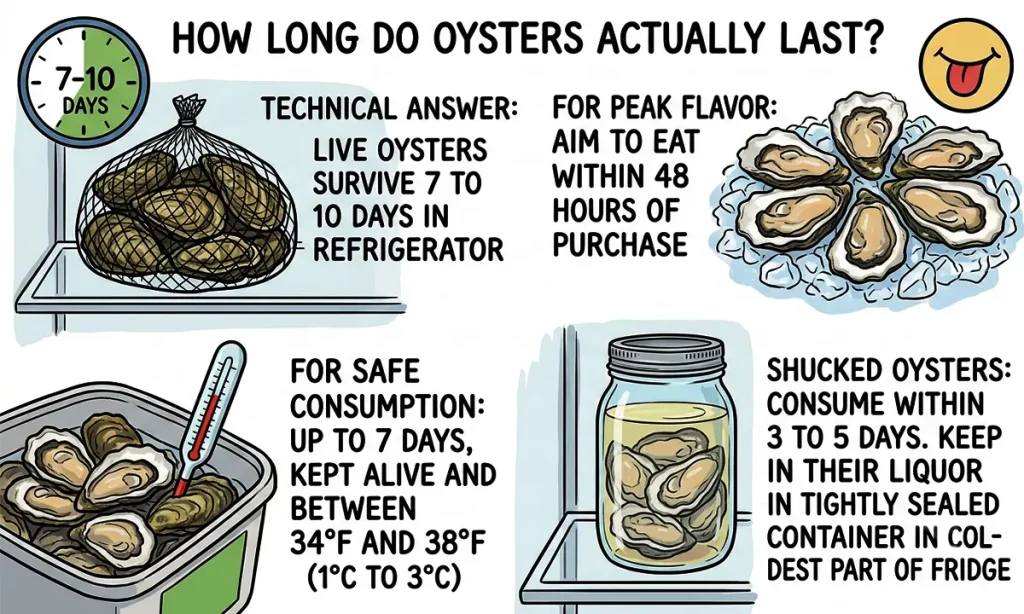
- For Peak Flavor: Aim to eat them within 48 hours of purchase. This is when the briny, ocean-fresh flavor is most vibrant.
- For Safe Consumption: Up to 7 days, provided they remain alive and are kept at a constant temperature between 34°F and 38°F (1°C to 3°C).
- Shucked Oysters: Treat these as a short-term luxury. Once out of the shell, they must be consumed within 3 to 5 days. Keep them in their liquor, inside a tightly sealed container, and place them in the absolute coldest part of your fridge.
Professional Storage Techniques
If you want to maintain that fresh-from-the-ocean quality, you need to stop throwing your oysters into a plastic bag or an airtight container. They will suffocate and die. Instead, treat them like royalty by following these three golden rules:
The Cup-Side Down Rule
Oysters hold their own natural saltwater, often called liquor. If you store them flat or upside down, this precious juice leaks out, causing the oyster to dry up and die rapidly. Always position the shell so the deep, cup-shaped side is facing down. This keeps the oyster beautifully bathed in its own juices, preserving its plump texture.
The Damp Towel Trick
Oysters need to breathe, but the dry, circulating air inside a modern refrigerator is their worst enemy.
- The Setup: Arrange your oysters in a single layer inside a shallow bowl or on a rimmed baking sheet.
- The Cover: Drape a clean, damp kitchen towel or paper towel over the top. This provides the ambient humidity they crave without sealing them in a suffocating environment. Never submerge them in fresh water or melt ice, as fresh water will kill them.
Seek Temperature Stability
The refrigerator door is a temperature roller coaster. Every time you open it, warm air rushes in, stressing the oysters. Always place your oyster tray in the very back of the bottom shelf. This is the coldest, most temperature-stable spot in your entire appliance.
How to Spot the Best Oysters at the Market
A great home raw bar experience starts at the seafood counter. When you are buying oysters, don’t just grab the first batch you see. Look for these three freshness indicators:
- Heavy Feel: Pick them up. A fresh, healthy oyster should feel surprisingly heavy for its size, indicating it is completely full of natural liquor.
- Tight Closures: The shells should be tightly shut. If a shell is gaping open slightly, give it a firm tap. If it doesn’t snap shut immediately, it’s dead or dying move on to the next one.
- A Clean, Briny Scent: Take a sniff. They should smell exactly like a clean ocean breeze fresh, crisp, and salty. If you catch even a faint hint of a fishy, muddy, or sour odor, walk away.
How to Shuck Like a Pro
Once you are ready to serve, the final hurdle is getting inside the shell. You don’t need a professional restaurant setup, just a bit of patience and the right technique:
- Preparation: Scrub the shells thoroughly under cold running water with a stiff brush to remove any loose sand, grit, or debris.
- Locate the Hinge: Hold the oyster cup-side down, wrapping your hand in a thick kitchen towel for protection. Find the hinge (the pointed, narrow back end of the oyster).
- The Key Twist: Insert the tip of a proper shucking knife firmly into the hinge. Apply gentle, steady pressure and twist the knife as if you are turning a key in a lock. You will hear and feel a distinct pop as the hinge releases.
- The Clean Slide: Slide the blade along the inside of the top shell to sever the adductor muscle. Remove the top shell, then gently run the knife underneath the oyster meat to completely release it from the bottom shell. Be careful not to spill the liquor!
When to Toss Them: The Hard No’s
As with all raw seafood, the golden rule is simple: when in doubt, throw it out. Do not take risks with your health. Discard any oyster if:
- The shell is cracked, broken, or damaged.
- The shell is open and does not react or close when tapped.
- It emits an unpleasant, strong or off odor immediately after shucking.
A Crucial Note on Food Safety
Consuming raw seafood always carries an inherent risk of foodborne illnesses, particularly from bacteria like Vibrio, which naturally occur in coastal waters. If you have a compromised immune system, are pregnant, or have underlying health conditions, it is highly recommended to enjoy your oysters thoroughly cooked (grilled, baked, or fried) rather than raw.
FAQs About Oysters by People
Can I freeze live oysters to make them last longer?
No, you should never freeze live oysters in the shell. The extreme cold will kill them instantly. However, you can freeze shucked oyster meat in a sealed bag with its liquor for up to 3 months, though they are best used for cooking (like stews or stuffing) rather than eating raw after thawing.
What happens if I accidentally eat a dead oyster?
Eating a dead oyster raw poses a severe risk of food poisoning, leading to symptoms like nausea, vomiting, diarrhea, and severe stomach cramps. Always use the tap test and smell test to ensure the oyster is alive before consuming.
Can I store oysters directly on ice inside the fridge?
You can, but only if the ice is placed in a colander or a perforated tray that allows the melting water to drain away completely. If oysters sit submerged in melted fresh water, they will absorb it, die, and spoil rapidly.
My last words
Serving fresh oysters at home shouldn’t feel like a chore. As long as you grab a high-quality catch from the counter and keep them in a stable, cold environment, your kitchen table instantly turns into a high-end raw bar. Just keep them cold, keep them cupped, and most importantly eat them the day you get them for the best flavor.

Hey, I’m MD BELAL! I’m the founder and appliance lover behind FridgeFAQ.com. Over the last 5 years, I’ve spent countless hours fixing cooling issues, optimizing temperatures, and turning ordinary mini fridges into fun DIY projects. I started this site to break down complicated fridge problems into simple, friendly advice so you can save money and fix your own appliances with confidence!